Nazare Big Wave Season 2026 and 2027: When To Go, Where To Stand
Nazare Big Wave Season 2026 and 2027: When To Go and Where To Stand
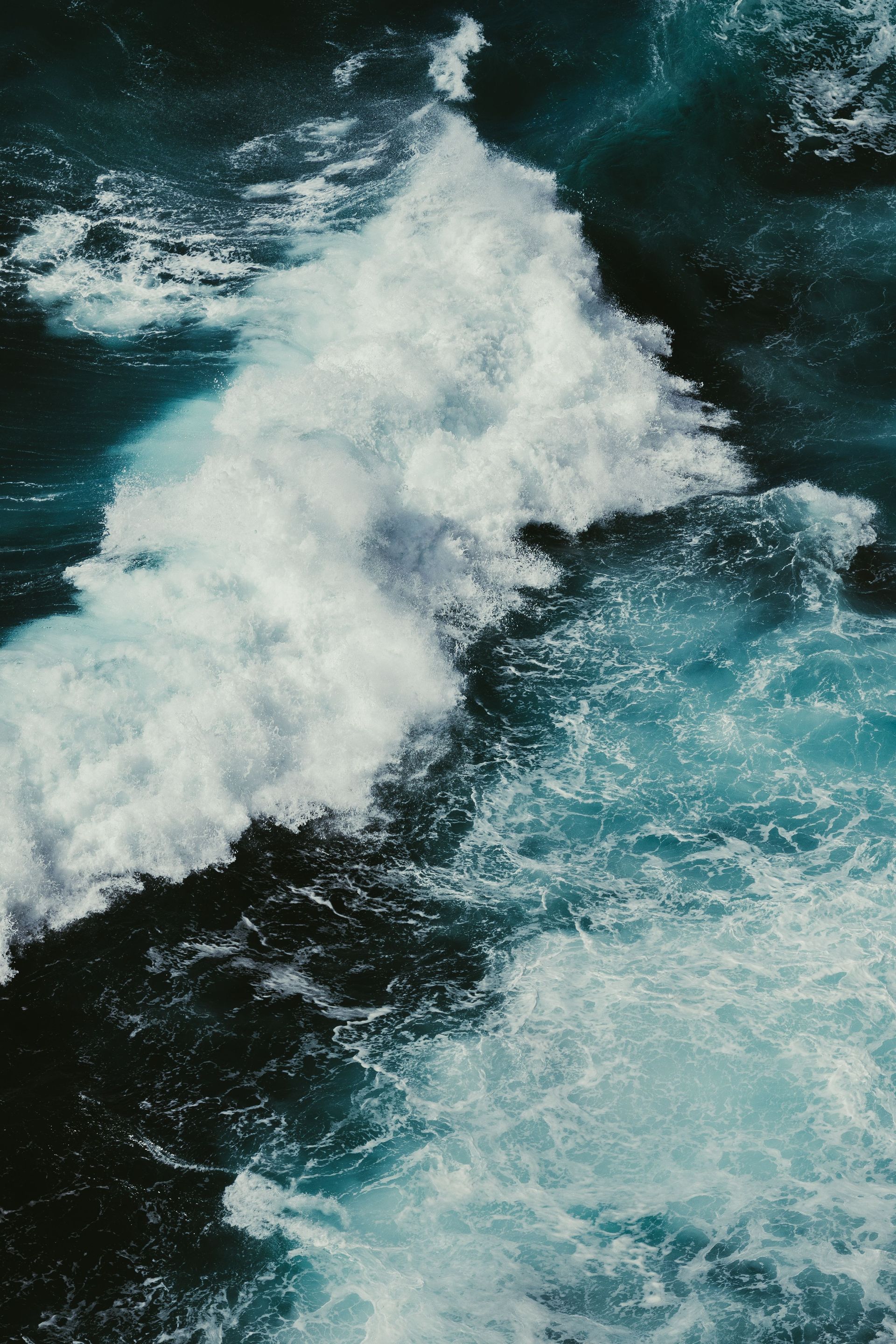
Somewhere between October and March, a low in the North Atlantic lines up with an underwater canyon off the Portuguese coast and Praia do Norte at Nazare produces waves that do not look real in photographs. It is ninety minutes north of Lisbon. Most people never go, because they assume you have to be a surfer, or they turn up in July and find a pleasant beach with normal waves on it.
Both problems are solvable. Here is how the season actually works.
Why the waves are that size here and nowhere else nearby
A submarine canyon runs out from the shore at Nazare and drops away to depths of several kilometres. Atlantic swell travelling over deep water hits it, gets funnelled and squeezed along the canyon, and arrives at Praia do Norte carrying far more energy than the same swell delivers to the beaches either side. [VERIFICAR: confirm the canyon's length and maximum depth before publishing.]
That is the whole explanation. Two hundred metres up the coast the waves are ordinary. At Praia do Norte they are not.
The season, and what "big" means
The window runs roughly October to March, and the largest days cluster in December, January and February. Outside that, Nazare is a normal Portuguese beach town with a good beach.
The record gives you a sense of scale. Sebastian Steudtner holds the ratified record for the biggest wave ever surfed, 26.21 metres, set at Nazare in 2020. A later ride of his was measured at 28.57 metres using drone technology, though the standing ratified figure is still the 2020 one. [VERIFICAR: check whether the larger ride has since been ratified.]
You will not see 26 metres. On a good winter day you might see fifteen metres, and fifteen metres breaking two hundred metres from where you are standing is more than enough.
The competition, and why nobody can tell you the date
The TUDOR Nazare Big Wave Challenge is the event people travel for. It is a one day, tow-in contest, surfers pulled into the wave by jet ski and scored in teams.
Here is the thing that catches visitors out. There is no fixed date. The event holds a window and waits, and it is only called when a swell arrives that can produce waves over eight metres with the right conditions. Organisers give a few days of notice at most.
For the coming season the window is expected to run 1 November 2026 to 31 March 2027. [VERIFICAR: confirm the 2026/27 window and any announced format changes before publishing.]
Watching is free, from the lighthouse headland and from Praia do Norte itself.
How to pick your day
If you are in Portugal for a fortnight and want one shot at seeing it properly, do this.
Watch the swell forecast, not the weather forecast. Any of the standard surf forecasting sites will give you swell height and period for Nazare several days out. The number that matters most is the period, in seconds. A three metre swell at eight seconds is a windy mess. A three metre swell at sixteen or eighteen seconds is a long-travelled Atlantic groundswell, and that is what turns into the walls Nazare is known for.
Look for a long period and a west or north west direction. Then check the wind. Offshore or light wind holds the wave face clean, strong onshore wind flattens the whole show.
Decide the night before. Three to five days out you can see a swell coming. The night before you know whether it is worth the drive. Do not book this a month ahead and hope.
Go at high tide if you can. Locals will tell you the wave changes across the tide, and the headland viewing is more dramatic when the water is up.
Where to stand
Forte de Sao Miguel Arcanjo, the fort with the red lighthouse on the headland. This is the spot. You are directly above the break, level with the surfers, and it is where every photograph you have seen was taken from. There is a small museum inside about the waves and the surfing, and entry was around two euros at the time of writing. [VERIFICAR: confirm current price and opening days.]
The clifftop path north of the fort. Free, wider views, and better if the fort is crowded on a contest day.
Praia do Norte itself. Closer, louder, and the place to feel the ground move. Stay well back from the water and off the wet rocks.
That last point is not a formality. People have been swept off rocks at Nazare on big days by waves much larger than the set before them. If the rock you are standing on is wet, the sea has already been there. Move.
The town, and the funicular
Nazare is two places. Praia, the beach town at sea level, and Sitio, the old village on the clifftop where the fort is.
They are joined by the Ascensor da Nazare, a funicular that has been running since 1889, 380 metres long up a 42 per cent gradient, built by the same engineer behind the Lisbon lifts. The fare was around two euros fifty at the time of writing. [VERIFICAR.] It is the pleasant way up and it drops you a short walk from the viewpoint.
The other thing to know about Nazare is that it is a working fishing town with an unusually intact tradition, including the seven petticoats the older women still wear, and fish drying on racks by the beach. Go for the waves, stay for lunch.
Doing it from Lisbon or the coast
Nazare sits about 120 kilometres north of Lisbon, roughly an hour and a half by road on the A8. [VERIFICAR: confirm distance and current drive time.]
- As a day trip. Leave early, be at the fort by mid morning, lunch in Praia, home by evening. Easy from Lisbon, Cascais or Sintra.
- With a stop. Obidos is close to the route and worth an hour, and Alcobaca and Batalha are both nearby if the day is more about monasteries than water.
- As an overnight. Worth it only if a serious swell is forecast for two consecutive days, because Nazare in winter is quiet after dark.
We manage homes on the Lisbon coast, in Cascais, Sintra, Margem Sul, the Algarve and Madeira rather than in Nazare itself, so the honest recommendation is to base yourself on the coast and drive up on the right day. Our guide to where to stay in Cascais covers the options there, and the portfolio has what is available. If the Atlantic in winter is the sort of thing you plan a trip around, the outdoor guide and the things to do guide cover the rest of the coast in the same season.
FAQ
When are the waves biggest at Nazare?
When is the Nazare Big Wave Challenge 2026 or 2027?
Where is the best place to watch the big waves?
Can I see big waves at Nazare in summer?
How do I know if it will be big on the day I visit?
Is it safe to watch from the beach?
How far is Nazare from Lisbon?
Homes on this coast, run by people who live on it
Handpicked places to stay across Lisbon, Cascais, Sintra, Margem Sul, the Algarve and Madeira, with a local team on the ground before, during and after every stay.
See the portfolioShare to social media
Leave a comment
More posts
Blog corner